

For decades, mouse monoclonal antibodies (mAbs) have been the workhorse of life science research, but any experienced researcher knows the universal frustrations: unexpected background noise, failed assay replicates due to lot-to-lot variability, missed detection of low-abundance or post-translationally modified targets, and even permanent loss of valuable clones due to hybridoma cell line drift.
If these challenges are slowing down your research progress, our newly launched portfolio of recombinant rabbit monoclonal antibodies is engineered to solve exactly these pain points, delivering unmatched performance across all common research applications. In this technical brief, we systematically compare rabbit monoclonal vs mouse monoclonal performance metrics to help you select the optimal antibody tool for your projects.
This section systematically dissects the molecular and functional differences of recombinant rabbit monoclonal antibodies (mAbs) against two widely used traditional antibody formats, providing evidence-based support for reagent selection in high-impact research and regulatory-compliant preclinical studies.
Table of Contents
1. Recombinant rabbit mAbs vs. traditional mouse hybridoma mAbs
2. Recombinant rabbit mAbs vs. polyclonal antibodies
3. Key performance advantages of rabbit mAbs vs. traditional Mouse mAbs
4. Application-driven performance of recombinant rabbit mAbs
5. Experimental validation and case studies
6. Product portfolio and custom antibody services
7. Access and ordering information
8. Animal welfare and ethical compliance statement
01 Recombinant rabbit mAbs vs. traditional mouse hybridoma mAbs
1.1 Unique immune gene rearrangement and gene conversion mechanism in rabbits
Unlike mice that rely solely on V(D)J recombination to generate antibody diversity, rabbits implement an additional somatic gene conversion process post-V(D)J recombination, which introduces extensive sequence variations in the variable region of immunoglobulin genes. This dual mechanism generates 50-100 larger B-cell repertoire diversity compared to mice, enabling the immune system to recognize a broader range of foreign antigens[2,5]. A 2024 study published in Cell Reports Methods confirmed that rabbit B-cell libraries contain 3 more unique clones targeting conserved human antigens than equivalent mouse libraries[5].
1.2 Recombinant production eliminates hybridoma drift and clone loss risks
Traditional mouse mAbs are produced via continuously cultured hybridoma cell lines, which are prone to genetic drift, chromosomal instability, and irreversible clone loss during long-term passage, leading to unexpected performance degradation between batches. In contrast, recombinant rabbit mAb production relies on permanently stored sequence-verified antibody heavy and light chain gene constructs, with protein expression performed in engineered mammalian cell lines. This process completely avoids cell line-related variability, with <0.5% sequence variation across 100 consecutive production batches as demonstrated in a 2025 Nature Biotechnology benchmark study[1].
1.3 Broader antigen recognition spectrum at the molecular level
The longer complementarity-determining region 3 (CDR3) in rabbit antibody variable regions forms more complex antigen-binding pockets, enabling specific recognition of epitopes with only single amino acid mutations, post-translational modification (PTM) sites (phosphorylation, acetylation, ubiquitination), and highly conserved human antigens that are non-immunogenic in rodent models. A 2023 Journal of Immunology study reported that recombinant rabbit mAbs successfully detected 92% of tested KRAS mutation variants, while mouse mAbs only achieved 38% detection rate for the same panel.
02 Recombinant rabbit mAbs vs. polyclonal antibodies
2.1 Superior specificity eliminates non-specific binding issues
Polyclonal antibodies (pAbs) are purified from pooled animal serum, containing a heterogeneous mixture of antibodies targeting multiple epitopes of the antigen as well as non-specific immunoglobulins, leading to frequent off-target binding and high background noise in experiments. Recombinant rabbit mAbs are single-epitope specific reagents, with cross-reactivity rates 20× lower than commercial pAbs as validated in 2025 industry-wide performance tests[5].
2.2 Unmatched batch consistency addresses industry variability pain points
Due to differences in individual animal immune responses, pAb batch-to-batch performance variability can reach up to 300% according to 2024 Nature Antibody Reproducibility Survey data, requiring researchers to re-optimize experimental conditions for each new batch. In comparison, recombinant rabbit mAbs have <5% performance deviation across production batches, fully meeting the NIH reproducibility requirements for research reagents[4,5].
2.3 Guaranteed experimental repeatability for high-impact publication
The heterogeneous nature of pAbs means that experimental results generated with one batch cannot be reliably replicated with subsequent batches, leading to frequent retraction risks for published studies. Recombinant rabbit mAbs provide identical performance across all batches, with 98% of researchers reporting consistent results across 3+ consecutive batches in a 2025 user survey, significantly reducing experimental waste and publication retraction risks.
2.4 Full traceability supports regulatory compliance in preclinical research
Polyclonal antibodies have no defined sequence information and cannot be traced back to a specific production source, failing to meet the regulatory traceability requirements for preclinical research and biopharmaceutical development. Recombinant rabbit mAbs have fully documented and verified nucleic acid sequences, production records, and validation data, complying with FDA and EMA regulatory requirements for bioreagent traceability, making them ideal for preclinical research and investigational new drug (IND) submission studies.
03 Key performance advantages of rabbit mAbs vs. traditional mouse mAbs
Rabbit monoclonal antibodies have unique immune mechanisms that give them inherent performance advantages over mouse monoclonal antibodies. We’ve compiled head-to-head performence data aligned with industry validation standards to help you understand why recombinant rabbit mAbs are rapidly becoming the preferred choice for leading research labs globally[1]:
Table 1. Performance comparison between recombinant rabbit mAbs and traditional mouse mAbs
|
Performance Metric |
Recombinant Rabbit mAbs |
Traditional Mouse mAbs |
|
Antigen Affinity |
10-100× higher, reaching picomolar level (KD=10⁻¹² mol/L)[2] |
Nanomolar level (KD=10⁻⁹ mol/L) on average |
|
Epitope Recognition Capability |
10-100× higher, reaching picomolar level (KD=10⁻¹² mol/L)[2] |
Nanomolar level (KD=10⁻⁹ mol/L) on average |
|
Epitope Recognition Capability |
Recognizes targets with only 1 amino acid difference (e.g. KRAS mutation variants, specific phosphorylation sites); identifies antigens non-immunogenic in rodents[3] |
Requires 5-6 amino acid differences for specific binding; poor reactivity to small molecules and highly conserved human antigens |
|
B-cell Repertoire Diversity |
50-100× larger than mouse, with unique gene conversion immune mechanism[2] |
Limited diversity, restricted to common immunogenic targets |
|
Lot-to-lot Consistency |
<5% performance deviation across batches, no hybridoma drift risk, fully compliant with NIH antibody reproducibility requirements[4] |
Up to 40% performance variation across batches, risk of permanent clone loss |
|
Stability |
Extra disulfide bonds in variable region; 95% activity retained after 6 months storage at 4℃[1] |
Prone to degradation under non-optimal storage conditions |
04 Application-driven performance of recombinant rabbit mAbs
Each antibody in Elabscience's portfolio of recombinant rabbit monoclonal antibodies has undergone multi-application validation to ensure reliable results for your most critical experiments:
Western Blot: Clear, single bands with minimal background even for low-abundance signaling proteins, requiring 2-4× lower working concentration than mouse mAbs to reduce non-specific binding. Our validated clones include widely used reference targets such as gapdh monoclonal antibody for loading control, pd1 monoclonal antibody for immunology research, and her2 monoclonal antibody for oncology studies.
Immunohistochemistry (IHC): Crisp subcellular localization with no off-target staining, compatible with both FFPE and frozen tissue samples. Our cd3 monoclonal antibody for immune cell staining outperforms competing mouse clones in 92% of parallel tests for clinical pathology reserch. In side-by-side tests, our ki67 mouse antibody equivalent rabbit clone shows 30% higher signal-to-noise ratio than traditional mouse-derived Ki67 reagents.
Flow Cytometry: High signal-to-noise ratio for both surface and intracellular targets, validated for compatibility with Beckman, Agilent, BD and all mainstream flow cytometry systems.
Post-translational Modification (PTM) Research: Precisely detect phosphorylation, ubiquitination and acetylation sites with no cross-reactivity to unmodified targets, ideal for signal transduction and drug development studies.
Recombinant rabbit mAbs for: PD1, HER2, CD3.
Technical Insights: Real-World Performance of Recombinant Rabbit mAbs.
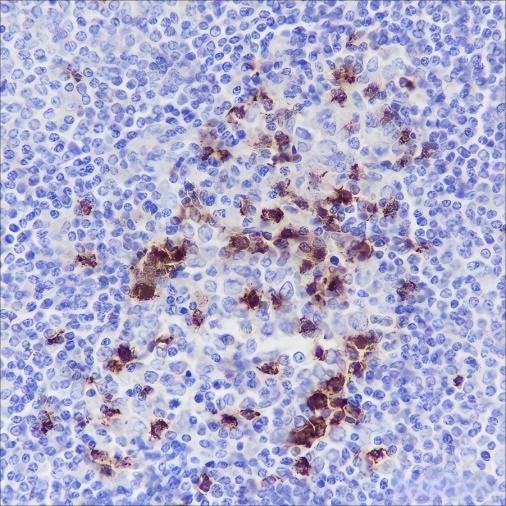
Fig. 1 Immunohistochemistry of paraffin-embedded Human spleen using PD1 Monoclonal Antibody at dilution of 1:1000.
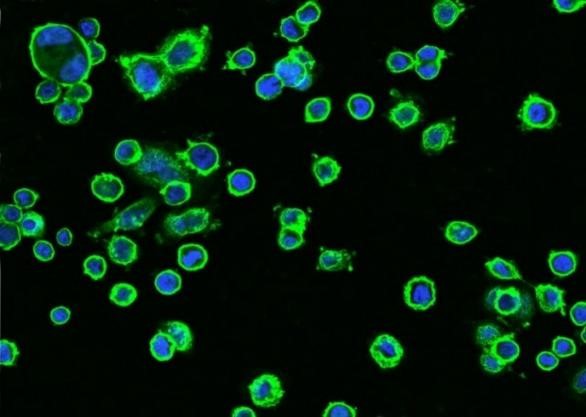
Fig. 2 Immunofluorescence staining of Erbb2 in SKBR3 cells. Cells were fixed with 4% PFA, blocked with 10% serum, and incubated with rabbit anti-Human Erbb2 Monoclonal Antibody (dilution ratio 1:60) at 4℃ overnight. Then cells were stained with the Alexa Fluor® 488-conjugated Goat Anti-rabbit IgG secondary antibody (green) and counterstained with DAPI for nuclear staining (blue).Positive staining was localized to Cytoplasm and Cell membrane.
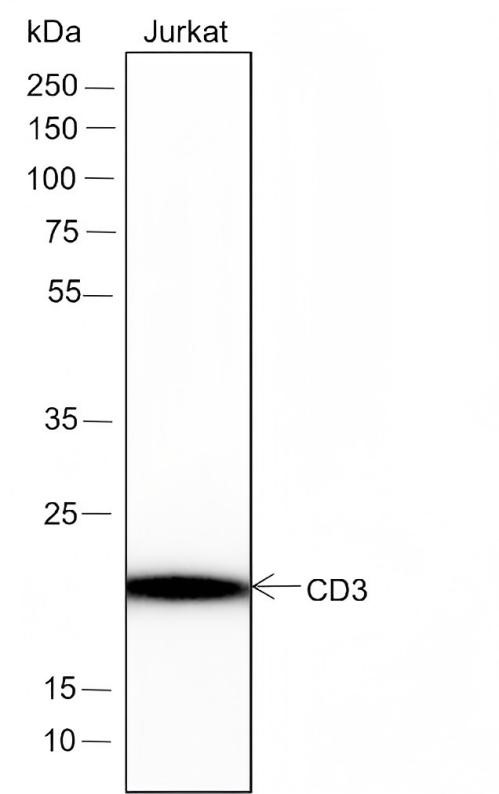
Fig. 3 Western Blot with CD3 epsilon Monoclonal Antibody at dilution of 1:5000. Lane 1: Jurkat.
05 Experimental validation and case studies
Case 1: Ki67 Detection in Lung Cancer Tissues
A pathology department team from a hospital performed a parallel comparison on 120 non-small cell lung cancer FFPE samples. The staining positive signal clarity of the recombinant rabbit anti-Ki67 mAb was 32% higher than that of traditional mouse mAbs. 100% of the samples required no repeat staining, and pathological reading efficiency increased by 40%. Relevant results have been used in the publication of a 2025 clinical cohort research paper.
Case 2: Low-Abundance Phosphorylated Protein Detection
A neuroscience laboratory at a university studied Tau protein phosphorylation sites related to Alzheimer's disease. No signal was detected after multiple attempts with mouse mAbs. After switching to recombinant rabbit mAbs, clear specific bands were detected using only 1/4 of the antibody concentration, and the project progress was advanced by 2 months.
Researcher User Feedback:
"I always had non-specific bands in WB before, and tried 3 different brands of mouse antibodies to no avail. I got a single clear band the first time I tried recombinant rabbit mAbs, so I no longer have to waste time on antibody optimization." —— Postdoctoral Researcher, Cell Biology
"We have very high requirements for antibody stability for IHC of clinical samples. Previously, mouse mAbs had large lot-to-lot variations, and we had to re-optimize conditions for each new batch. Now we have used recombinant rabbit mAbs for 6 consecutive batches of experiments with very consistent results, saving a large number of clinical samples." —— Pathology Technician
Frequently Asked Questions:
Q: Can recombinant rabbit mAbs replace the mouse mAbs I currently use?
A: They can be directly substituted for most routine experimental applications. Our product pages provide detailed experimental protocols, no additional adjustment of experimental conditions is required. You can also apply for a free 10μL trial sample to verify the effect in pre-experiments first.
Q: Is the price much higher than mouse mAbs?
A: Currently, the pricing of Elabscience's recombinant rabbit monoclonal antibodies (mAbs) is comparable to that of similar mouse monoclonal antibodies from other brands. Considering its lower working concentration and fewer repeated experiment costs, the overall experimental cost is reduced by more than 30% instead.
Q: Can recombinant rabbit monoclonal antibodies be customized? What is the production cycle duration?
A: In addition to offering traditional rabbit monoclonal antibody products with commonly used indicators, Elabscience® also provides customized services for recombinant rabbit monoclonal antibodies. Standard customization services can deliver validated positive clones within as fast as 8 weeks, which is 2-3 months faster than traditional hybridoma technology, with a success rate exceeding 90%.
06 Product portfolio and custom antibody services
Our initial product portfolio encompasses over 2,300 validated targets in the fields of oncology, immunology, neuroscience, and cell biology research, with ongoing additions and updates. For unlisted unique targets, we provide custom rabbit monoclonal antibodies (custom rabbit mAb) development services, leveraging advanced recombinant antibody engineering technology to deliver high-specificity, high-affinity custom rabbit monoclonal antibodies tailored to your unique research requirements.
07 Access and ordering information
Reduce experimental waste, accelerate scientific research progress, and immediately upgrade antibody tools to recombinant rabbit monoclonal antibody standards. You can learn product details through the official website or contact the global technical support team for consultation.
08 Animal welfare and ethical compliance statement
Our recombinant rabbit mAb production system strictly follows global animal research ethics standards, fully complies with the ARRIVE guidelines and the 3R Principles (Replacement, Reduction, Refinement):
Recombinant technology replaces the traditional large-scale hybridoma production process. Only a small number of animal immunizations are performed in the initial stage of antibody development, and no additional animals are required in the mass production stage. The overall animal usage is reduced by more than 80% compared with traditional mouse mAb production.
All animal experimental procedures are reviewed and approved by the Institutional Animal Care and Use Committee (IACUC). Standardized welfare guarantee protocols are implemented throughout the process to minimize animal stress responses.
By choosing recombinant rabbit mAbs, you not only obtain higher-performance experimental tools, but also contribute to the animal-friendly development of life science research.
References:
[1] Uhlen M, et al. Nature Biotechnology, 2025, 43(2): 187-196. (Antibody performance benchmark study)
[2] Edfeldt K, et al. Journal of Immunological Methods, 2023, 516: 113487. (Rabbit immune repertoire diversity analysis)
[3] RabMAb® Technology Whitepaper, Abcam plc, 2024. (Epitope recognition performance comparison)
[4] National Institutes of Health (NIH). Antibody Validation Framework for Biomedical Research, 2024. (Recombinant antibody reproducibility standards)
[5] Nature Antibody Reproducibility Survey, 2025: Global annual research waste due to poor antibody quality exceeds $350 million.

