

Table of Contents
1. Human Granulocytes: Subtypes, Functions, and Research Progress
2. Key Challenges in Human Granulocyte Isolation and Research
3. Human Granulocyte Isolation Kits: Products and Specifications
4. Key Advantages of the EasySort™ Granulocyte Isolation Kits
5. Performance Validation of the EasySort™ Granulocyte Isolation Kits
6. Supporting Accessories and Cell Isolation Product Portfolio
01 Human Granulocytes: Subtypes, Functions, and Research Progress
Granulocytes are the most abundant innate immune cells in peripheral blood, comprising three major subpopulations: neutrophils, eosinophils, and basophils. As the core effector cells of innate immunity, granulocytes are responsible for the rapid clearance of pathogens such as bacteria and fungi, serving as the body's first line of immune defense. The classification and functional differences among the three types of granulocytes are compared in the table below.
Table 1. Classification and functional comparison of granulocyte subpopulations
|
Subpopulation |
Primary Category |
Peripheral Blood Proportion |
Major Physiological Functions |
Key Pathological Roles |
|
Neutrophils |
The body's first line of antibacterial defense; core effector cells of innate immunity |
50%–70% (highest proportion) |
● Rapid phagocytosis and clearance of bacteria, fungi, and other pathogens; ● Release of neutrophil extracellular traps (NETs) to capture pathogens; ● Secretion of cytokines to regulate the initiation and resolution of inflammation; ● Participation in tissue repair following skin injury; ● Cross-presentation of antigens, bridging innate and adaptive immunity. |
● Overactivation/pyroptosis releases damage-associated molecular patterns (DAMPs), triggering inflammatory organ damage; ● Exhibits bidirectional plasticity in the tumor microenvironment, presenting as N1 (antitumor) or N2 (protumor) phenotypes; ● Release of NETs remodels the tumor microenvironment, driving tumor metastasis and immunotherapy resistance. |
|
Eosinophils |
Core effector cells of anti-parasite immunity and key regulators of type 2 inflammation |
0.5%-5% |
● Release of granule toxins to kill large parasites such as helminths and schistosomes; ● Secretion of IL-4, IL-5, and IL-13 to regulate Th2-type immune responses; ● Maintenance of immune homeostasis and suppression of excessive inflammatory responses. |
● Excessive infiltration releases eosinophil extracellular traps (EETs), driving airway/skin fibrosis; ● Sustained amplification of type 2 inflammation, exacerbating allergic tissue damage; ● Aberrant activation involved in tissue destruction in autoimmune diseases. |
|
Basophils |
Master switch for immediate-type hypersensitivity reactions; upstream regulatory cells of type 2 immunity |
0%–1% (lowest proportion in circulation) |
● Rapid degranulation upon allergen stimulation, initiating immediate-type hypersensitivity reactions; ● Secretion of TSLP and IL-4 to drive Th0-to-Th2 differentiation, amplifying type 2 immune responses; ● Auxiliary involvement in immune responses against parasitic and chronic viral infections. |
● Excessive degranulation releases histamine/leukotrienes, triggering severe anaphylactic shock; ● Sustained secretion of inflammatory signals, amplifying the chronic allergic inflammation cycle. |
02 Key Challenges in Human Granulocyte Isolation and Research
Current research on granulocytes is primarily directed toward two major axes—neutrophils and eosinophils—while also encompassing granulocyte development and the mechanistic exploration of rare diseases. In the neutrophil field, recent advances include immune senescence regulation, ferroptosis-driven immunosuppression within the tumor microenvironment, NCX1-targeted therapeutic strategies for airway inflammation, and in vivo mesoscopic imaging for real-time tracking of cellular dynamics. In the eosinophil field, Chinese population-based real-world data for anti-IL-5Rα monoclonal antibodies in severe asthma have been established; eosinophil extracellular traps (EETs) have been conclusively identified as a critical link bridging inflammation, autoimmunity, and thrombosis in EGPA; and single-cell omics approaches have further enabled precise disease subtyping.
Nevertheless, granulocyte research continues to face challenges including cellular impurities, subtype cross-contamination, and diminished cell viability, often resulting in inconsistent experimental outcomes and poor reproducibility. In response, Elabscience® proudly introduces two newly developed granulocyte isolation kits designed to accommodate a broad spectrum of high-level research applications. The Total Granulocyte Isolation Kit offers rapid enrichment of the entire granulocyte population, ideal for global-level investigations such as comprehensive functional profiling, metabolic regulation, and preliminary omics screening. The Neutrophil Isolation Kit, on the other hand, effectively minimizes interference from eosinophils and basophils, delivering superior purity—making it particularly well-suited for in-depth mechanistic studies, including NETosis exploration, immunometabolism, cellular heterogeneity, sepsis phenotyping, and CAR-neutrophil construction.
Both granulocyte isolation kits utilize a gentle negative selection methodology to preserve high cell purity, excellent viability, and full functional integrity. They are fully compatible with diverse downstream applications—ranging from single-cell sequencing and functional studies to drug screening and cell infusion—effectively ensuring robust experimental data and improved reproducibility. Designed to address the latest frontiers in granulocyte research, these kits enable researchers to accelerate project progress and deliver high-quality, publishable outcomes with greater efficiency.
03 Human Granulocyte Isolation Kits: Products and Specifications
Table 2. Basic Information of Elabscience® Cell Isolation Kits
|
Cat. No. |
Product Name |
Size |
Storage |
|
MIH012N |
EasySort™ Human Pan-Granulocyte Isolation Kit |
10/100/200 Assays |
2-8℃ |
|
MIH013N |
EasySort™ Human Neutrophil Isolation Kit |
10/100/200 Assays |
2-8℃ |
04 Key Advantages of the EasySort™ Granulocyte Isolation Kits
● Eliminates the need for erythrocyte lysis, thereby safeguarding cell viability.
● Non-activating isolation procedure; isolated cells remain unlabeled by antibodies or magnetic beads, ensuring unperturbed cellular functionality.
● Achieves exceptionally high purity, with isolated cell populations routinely exceeding 90% purity.
● Column-free separation process for streamlined operation.
● Rapid protocol enabling completion of negative isolation in as little as 20 minutes.
● Versatile application across both freshly isolated and cryopreserved human PBMC samples.
05 Performance Validation of the Elabscience® EasySort™ Granulocyte Isolation Kits
5.1 Purity Detection of Total Granulocytes
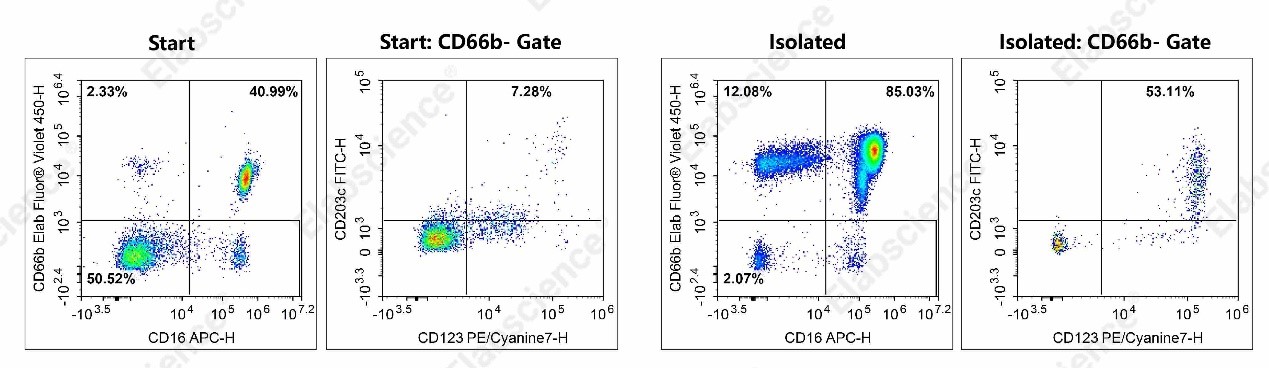
Fig. 1 Assessment of total granulocyte purity from human peripheral blood pre- and post-isolation. Peripheral blood samples obtained from healthy volunteers were treated with 1× ACK erythrocyte lysis buffer, followed by isolation of total granulocytes using the EasySort™ Human Pan-Granulocyte Isolation Kit (MIH012N). Purities were evaluated by flow cytometry with the following antibodies: Elab Fluor® Violet 450 Anti-Human CD66b [G10F5] (E-AB-F1267Q), APC Anti-Human/Monkey CD16 [3G8] (E-AB-F1236E), PE/Cyanine7 Anti-Human CD123 [6H6] (E-AB-F1117H), and FITC Anti-Human CD203c [NP4D6] (E-AB-F1297C). The purity of total granulocytes in normal peripheral blood samples increased from approximately 43.3% prior to sorting to approximately 97.1% post-sorting. (Granulocyte subsets were identified as: neutrophils CD66b⁺CD16⁺; eosinophils CD66b⁺CD16⁻; basophils CD66⁻CD123⁺CD203c⁺).
5.2 Purity Detection of Neutrophils
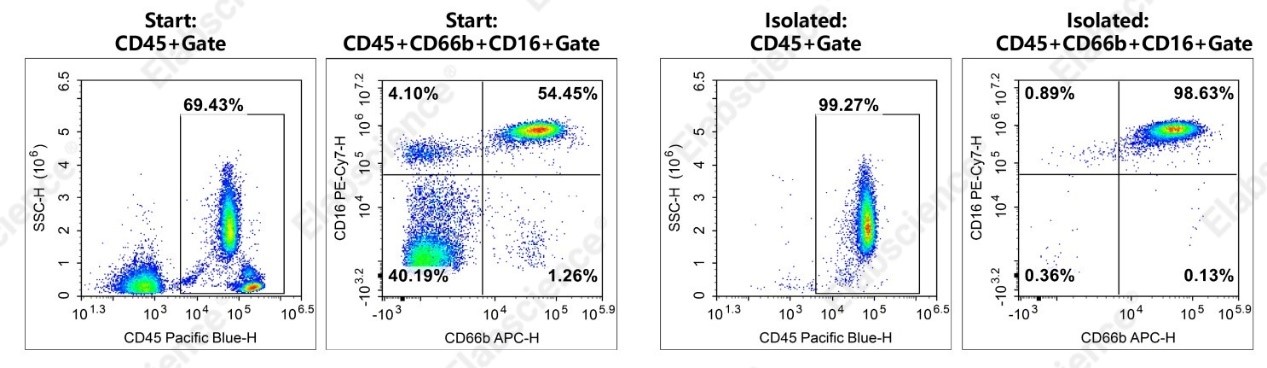
Fig. 2 Evaluation of neutrophil purity from human peripheral blood pre- and post-isolation. Peripheral blood samples from healthy volunteers were subjected to erythrocyte lysis with 1× ACK buffer, followed by neutrophil isolation using the EasySort™ Human Neutrophil Isolation Kit (MIH013N). Post-isolation purity was assessed by flow cytometry using Elab Fluor® Violet 450 Anti-Human CD45 [HI30] (E-AB-F1137Q), APC Anti-Human CD66b [G10F5] (E-AB-F1267E), and PE/Cyanine7 Anti-Human/Monkey CD16 [3G8] (E-AB-F1236H). The purity of neutrophils (defined as CD45⁺CD66b⁺CD16⁺) in normal peripheral blood leukocyte samples increased from 37.80% prior to sorting to 97.91% after sorting.
5.3 Batch Reproducibility Verification
Table 3. Batch-to-batch and within-batch variability quality control data for the Neutrophil and Total Granulocyte Isolation Kits
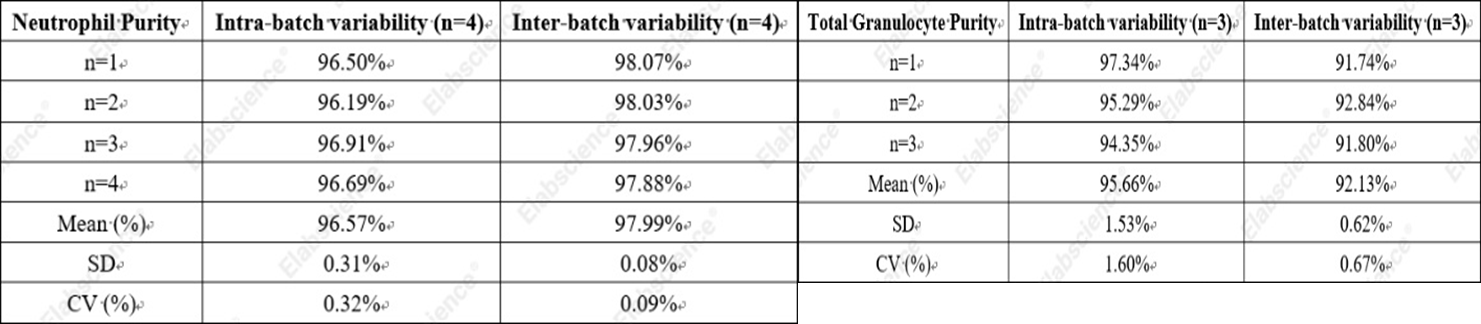
The results in the table demonstrate that both the Neutrophil and Total Granulocyte Isolation Kits exhibit excellent batch-to-batch and within-batch reproducibility, with all CV values≤5%.
5.4 Stability Verification
Table 4. Long-term and accelerated stability test results for the Neutrophil and Total Granulocyte Isolation Kits

Both the Neutrophil Isolation Kit and the Total Granulocyte Isolation Kit have been validated through accelerated stability testing at 37°C and simulated transportation stability testing over a 30-day period. The test results confirm that the performance of both kits remains stable and robust throughout the evaluated conditions.
5.5 Reagent Titration Linearity Verification
Table 5. Titration assay results for the Neutrophil Isolation Kit
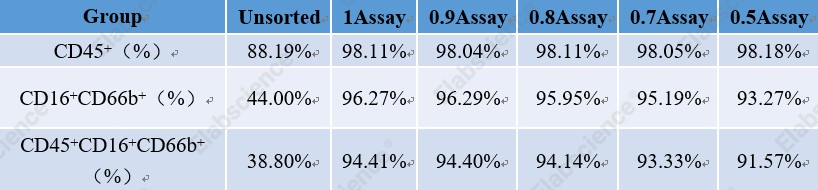
Human peripheral blood leukocytes were resuspended at a density of 1 × 10⁸/mL. Neutrophils were then isolated using 1.0, 0.9, 0.8, 0.7, and 0.5 Assay volumes of the isolation reagent, and the purity of the sorted cells was evaluated by flow cytometry. As shown by the results, the kit demonstrates excellent dilution linearity, with post-sorting purities consistently maintained between 91% and 95% across the 0.5-1 Assay working range.
5.6 Functional Activity of Isolated Neutrophils
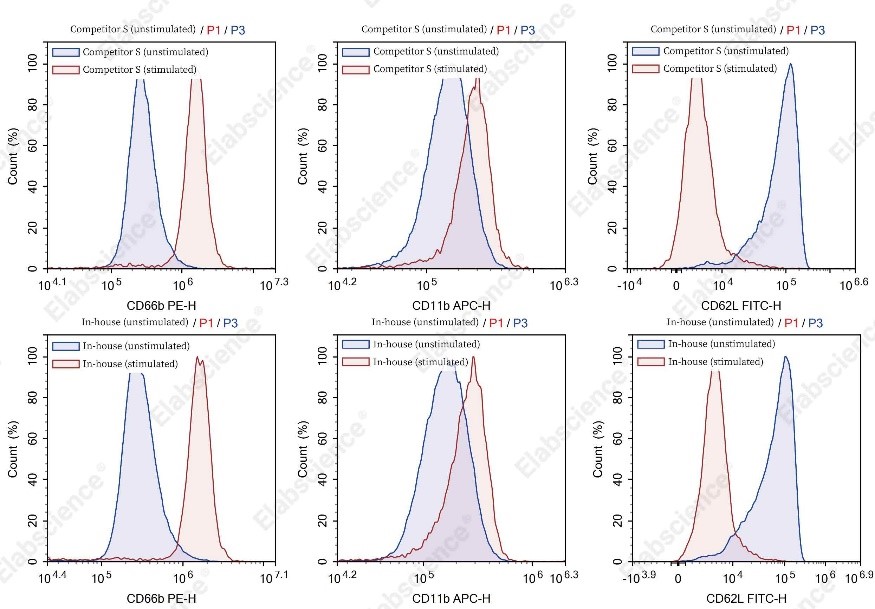
Fig. 3 Assessment of neutrophil functional activity in vitro. High-purity neutrophils were isolated from human peripheral blood leukocytes and resuspended at a density of 1 × 10⁶/mL. The cells were stimulated with 50 nM PMA for 15 minutes to induce activation, followed by flow cytometric analysis using the following antibodies: PE Anti-Human CD66b [G10F5] (E-AB-F1267D), APC Anti-Human/Monkey CD11b [ICRF44] (E-AB-F1146E), and FITC Anti-Human CD62L [DREG56] (E-AB-F1051C). The results showed that upon PMA stimulation, the expression of CD66b, CD11b, and CD62L was markedly upregulated compared with the non-activated control group. Notably, the activation profile obtained with the Elabscience® kit was comparable to that of the competitor Brand S, confirming the functional integrity of the isolated neutrophils.
5.7 Compatible Magnetic Stands for Different Sorting Volumes
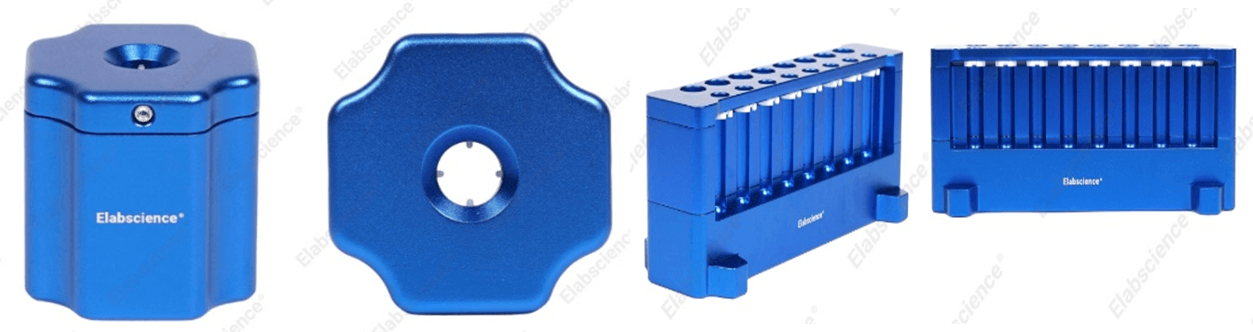
Fig. 4 Product display of multiple compatible magnetic stands with varying capacities. Magnetic stands compatible with different sorting volumes are now available.
06 Supporting Accessories and Cell Isolation Product Portfolio
Table 6. Supporting Magnetic Stands and Cell Isolation Reagents for EasySort™ Cell Separation
|
Cat. No. |
Product Name |
|
MIM009N |
EasySort™ Mouse Memory CD4+T Cell Isolation Kit |
|
EC002 |
EasySort™ Single-5 Magnet |
|
EC003 |
EasySort™ Single-10 Magnet |
|
EC004 |
EasySort™ Sixteen-5/15 Magnet |
|
EC001 |
EasySort™ Seven-5 Magnet |
Table 7. EasySort™ Cell Isolation and Immune Cell Research Product Portfolio
|
Cat. No. |
Product Name |
|
E-CK-A103 |
Human PBMC Separation Solution(P 1.077) |
|
EC001 |
EasySort™ Seven-5 Magnet |
|
MIH001A |
Human CD3/CD28 T Cell Activation Beads |
|
MIM001A |
Mouse CD3/CD28 T Cell Activation Beads |
|
E-CK-A345 |
CFSE Cell Division Tracker Kit |
|
MIH001N |
EasySort™ Human CD3+T Cell Isolation Kit |
|
MIH002N |
EasySort™ Human CD4+ T Cell Isolation Kit |
|
MIH003N |
EasySort™ Human CD8+ T Cell Isolation Kit |
|
MIH004N |
EasySort™ Human B Cell Isolation Kit |
|
MIM001N |
EasySort™ Mouse CD3+T Cell Isolation Kit |
|
MIM002N |
EasySort™ Mouse CD4+T Cell Isolation Kit |
|
MIM003N |
EasySort™ Mouse CD8+T Cell Isolation Kit |
|
MIM004N |
EasySort™ Mouse B Cell Isolation Kit |
|
MIM005N |
EasySort™ Mouse NK Cell Isolation Kit |
|
MIH006N |
EasySort™ Human Naïve Pan T Cell Isolation Kit |
|
MIH007N |
EasySort™ Human Naïve CD4+T Cell Isolation Kit |
|
MIH008N |
EasySort™ Human Naïve CD8+T Cell Isolation Kit |
|
MIM006N |
EasySort™ Mouse Pan-Naïve T Cell Isolation Kit |
|
MIM007N |
EasySort™ Mouse Naïve CD4+T Cell Isolation Kit |
|
MIM008N |
EasySort™ Mouse Naïve CD8+T Cell Isolation Kit |
|
MIH009N |
EasySort™ Human Memory CD4+T Cell Isolation Kit |
|
MIH010N |
EasySort™ Human Memory CD8+T Cell Isolation Kit |

