

In recent years, precision oncology has become the mainstream direction of global cancer research and clinical diagnosis. Tumor biomarkers, as critical indicators for early cancer screening, efficacy monitoring, prognosis evaluation, and recurrence detection, are playing an irreplaceable role in translational medicine.
Table of Contents
1. Introduction: challenges and opportunities in tumor biomarker research
2. The core advantages of Uncoated ELISA kits in oncology research
3. Application scenarios in oncology research
4. Performance validation results of Elabscience® Uncoated ELISA kits
5. How to select the appropriate Uncoated ELISA kit for your tumor research?
01 Introduction: challenges and opportunities in tumor biomarker research
Multiple technologies have been developed for the detection of tumor biomarkers as follows. In the past decades, immuno-oncology research tools have played crucial roles in the discovery of tumor biomarkers. Meanwhile, molecular hybridization technology and gene amplification detection technology further broaden the horizon of the application of tumor biomarkers in clinical practice. Immunohistochemistry (IHC) brings about the original distribution of biomarkers in fixed tissue. Furthermore, rapidly developed DNA sequencing and gene-editing technologies accelerate the speed and numbers of digging out prognostic and predictive tumor biomarkers. Other technologies, such as liquid biopsy and different microscopy technologies, as well as single-cell sequencing analysis[2], also provide tremendous convenience in cancer therapy.
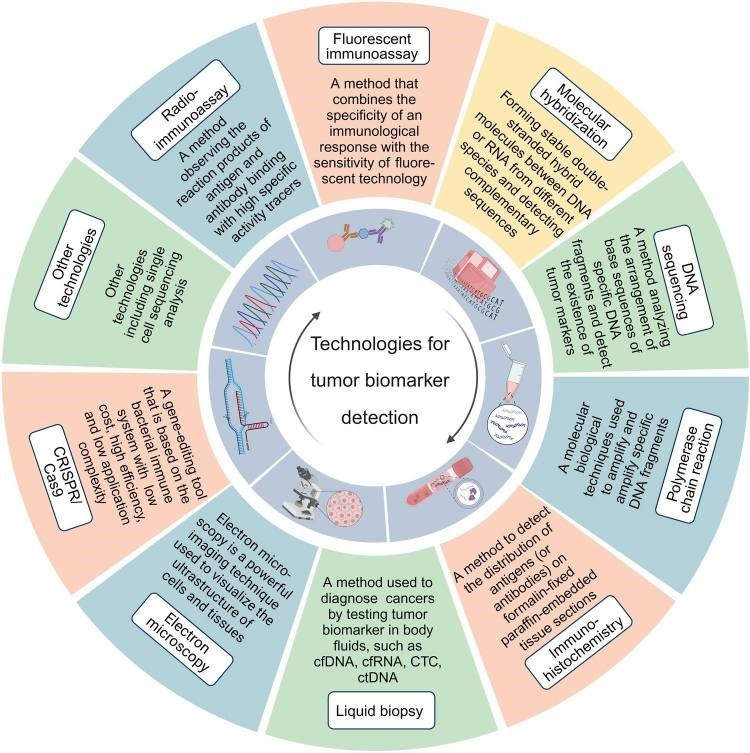
Fig. 1 Technologies for the detection of tumor biomarkers[1].
Under the global oncology research trends (such as liquid biopsy and precision medicine), the demand for biomarker discovery and validation is constantly upgrading, and researchers are in urgent need of flexible, efficient and highly adaptable detection tools. Traditional coated ELISA kits have pain points such as insufficient flexibility, inability to customize on demand, and limited adaptability to various detection scenarios in the discovery of new tumor biomarkers. However, uncoated ELISA kits, with their core advantages of customization and high adaptability, perfectly meet the diverse needs of tumor biomarker research, becoming the preferred tool for researchers to carry out related research, and providing strong support for early tumor screening, efficacy monitoring and mechanism research.
02 The core advantages of Uncoated ELISA kits in oncology research
2.1 Flexibility: optimize assay conditions for your specific tumor sample types
Tumor sample matrices are complex (tissue lysates, pleural effusions, etc.), and the fixed conditions of pre-coated kits often fail to overcome matrix interference. Elabscience® uncoated ELISA assay kits, which provide matched antibody pairs (capture and detection antibody), allow you to independently adjust coating antibody concentration, blocking buffer type, and incubation conditions. For example, for high-protein tissue lysates, increasing blocking buffer concentration significantly reduces background; for low-abundance targets, extending 4°C overnight coating improves sensitivity. You can also fine-tune the ratio of capture and detection antibody to achieve optimal performance.
%20vs_%20data%20after%20optimization%20by%20Elabscience%C2%AE%20(right)_.png)
Fig. 2 Standard curve data of Human TARC: customer-provided data (left) vs. data after optimization by Elabscience® (right).
2.2 Cost-Effectiveness: an economical choice for high-throughput biomarker screening
Oncology research often involves high-throughput screening and large-cohort validation; buying pre-coated kits for every target would be prohibitively expensive. Uncoated kits (e.g., 96T*5 format) provide enough matched ELISA antibody pairs (including both capture and detection antibody) to coat five plates, allowing batch coating and flexible use. For 10 targets and 100 samples, this can save 30%-50% of reagent costs compared to pre-coated kits. By using uncoated ELISA assay formats, you avoid paying for unnecessary plate materials while retaining high-quality elisa antibody pairs.
2.3 Customizability: offering more possibilities for multi-platform applications
When the sensitivity of colorimetric ELISA falls short of your detection requirements, you may wish to explore more sensitive chemiluminescence (CLIA) platforms. Elabscience® uncoated ELISA assay kits provide rigorously validated matched antibody pairs (i.e., capture and detection antibody) and HRP enzyme, offering a solid foundation for cross-platform exploration. These elisa antibody pairs are carefully screened to ensure strong affinity and specificity. While the suitability for chemiluminescence platforms must be experimentally verified for each specific target, uncoated kits give you the flexibility to try different detection platforms without the need to re-screen antibody pairs (the same capture and detection antibody work across platforms), saving significant upfront development time compared to fixed‑formula pre‑coated kits.
Table 1. The components of Elabscience® Uncoated ELISA kits
|
Item |
Specifications |
Characteristics |
|
Micro ELISA pre-Plate |
96T*5/96T*15 |
Free |
|
Capture Antibody |
96T*5/96T*15 |
Free |
|
Biotinylated Detection Antibody |
96T*5/96T*15 |
Free |
|
Reference Standard |
96T*5/96T*15 |
Free |
|
HRP Conjugate |
96T*5/96T*15 |
Free |
03 Application scenarios in oncology research
Scenario 1: discovery and validation of novel tumor biomarkers
Suppose you are studying a newly discovered secreted protein that is upregulated in the serum of lung cancer patients, but no commercial pre-coated kit is available. Using Elabscience® uncoated kits, you can quickly establish a detection assay: coat the capture antibody onto microplates, block, add patient sera and control samples, then detect with biotinylated detection antibody and HRP conjugate. By optimizing the standard concentration range and incubation times, you can obtain reliable quantitative data within two days. More importantly, you can easily scale up coating from a few plates to dozens as your validation sample size grows.
Scenario 2: cytokine profiling in the tumor immune microenvironment
Detecting multiple cytokines (e.g., IL-6, TNF-α, IFN-γ) from tumor tissue lysates or tumor‑infiltrating lymphocyte culture supernatants is a hot topic in immuno‑oncology research. Elabscience® offers uncoated cytokine kits covering human, mouse, rat, and other species, allowing you to flexibly assemble your own detection panel. For complex matrices like tissue lysates, optimizing blocking conditions and sample dilution factors effectively reduces background interference.
Scenario 3: efficacy evaluation and mechanism study of anti-cancer drugs
In anti‑cancer drug development, it is often necessary to measure changes in target proteins (e.g., VEGF or EGFR) secreted by tumor cells before and after drug treatment. Elabscience® uncoated kits enable accurate quantification of these targets in cell culture supernatants. Moreover, bulk formats (e.g., 96T*15) are ideal for time‑course studies: coat enough plates in one batch to ensure consistent assay conditions across all time points.
Sample collection and pretreatment
Serum: Allow samples to clot for 1 hour at room temperature or overnight at 2-8℃ before centrifugation for 20 min at 1000×g at 2-8℃. Collect the supernatant to carry out the assay.
Plasma: Collect plasma using EDTA-Na2 as an anticoagulant. Centrifuge samples for 15 min at 1000×g at 2-8℃ within 30 min of collection. Collect the supernatant to carry out the assay.
Cell culture supernatant or other biological fluids: Centrifuge samples for 20 min at 1000×g at 2-8°C. Collect the supernatant to carry out the assay.
Recommended Elabscience® uncoated ELISA kits
Elabscience® offers a variety of ELISA kits for tumor immunology research, enabling the detection of soluble immune checkpoint molecules and other immune-related targets in human and mouse serum, plasma, and culture supernatants.
Table 2. Products in the field of cancer research
|
Cat. No. |
Product Name |
Size |
|
E-UNEL-H0044 |
Uncoated Human EPO(Erythropoietin) ELISA Kit |
96T*5/96T*15 |
|
E-UNEL-R0055 |
Uncoated Rat TIMP-1(Tissue Inhibitors of Metalloproteinase 1) ELISA Kit |
96T*5/96T*15 |
|
E-UNEL-H0171 |
Uncoated Human TIMP-1(Tissue Inhibitors of Metalloproteinase 1) ELISA Kit |
96T*5/96T*15 |
|
E-UNEL-M0186 |
Uncoated Mouse αFP(Alpha-Fetoprotein) ELISA Kit |
96T*5/96T*15 |
|
E-UNEL-H0097 |
Uncoated Human IL-6(Interleukin 6) ELISA Kit |
96T*5/96T*15 |
|
E-UNEL-H0069 |
Uncoated Human IFN-γ(Interferon Gamma) ELISA Kit |
96T*5/96T*15 |
|
E-UNEL-H0041 |
Uncoated Human EGFR(Epidermal Growth Factor Receptor) ELISA Kit |
96T*5/96T*15 |
|
E-UNEL-H0179 |
Uncoated Human VEGF165(Vascular Endothelial Growth Factor 165) ELISA Kit |
96T*5/96T*15 |
|
E-UNEL-H0143 |
Uncoated Human FAS/CD95(Factor Related Apoptosis) ELISA Kit |
96T*5/96T*15 |
|
E-UNEL-H0169 |
Uncoated Human TGF-β1(Transforming Growth Factor Beta 1) ELISA Kit |
96T*5/96T*15 |
04 Performance validation results of Elabscience® Uncoated ELISA kits
Oncology researchers demand the highest data quality: low CVs, high recovery, and excellent Inter-batch Consistency are essential for publishing in high-impact journals. Elabscience® uncoated kits undergo rigorous quality control.
The Elabscience® Uncoated Human IL-6 ELISA Kit (Cat. No. E-UNEL-H0097):
Table 3. Intra assay and inter assay precision verification of Uncoated Human IL-6 ELISA Kit
|
|
Intra Assay Precision |
Inter Assay Precision |
||||
|
Sample |
1 |
2 |
3 |
1 |
2 |
3 |
|
n |
20 |
20 |
20 |
20 |
20 |
20 |
|
Mean (pg/mL) |
96.92 |
301.79 |
896.43 |
103.56 |
287.74 |
1041.26 |
|
Standard deviation |
5.02 |
14.39 |
54.14 |
6.32 |
23.59 |
62.54 |
|
CV (%) |
5.18 |
4.77 |
6.04 |
6.10 |
8.20 |
6.01 |
Table 4. Recovery analysis of the Uncoated Human IL-6 ELISA Kit
|
Sample Type |
Range % |
Average Recovery % |
|
Serum (n=8) |
88-101 |
93 |
|
EDTA Plasma (n=8) |
93-103 |
98 |
|
Cell Culture Media (n=8) |
92-104 |
98 |
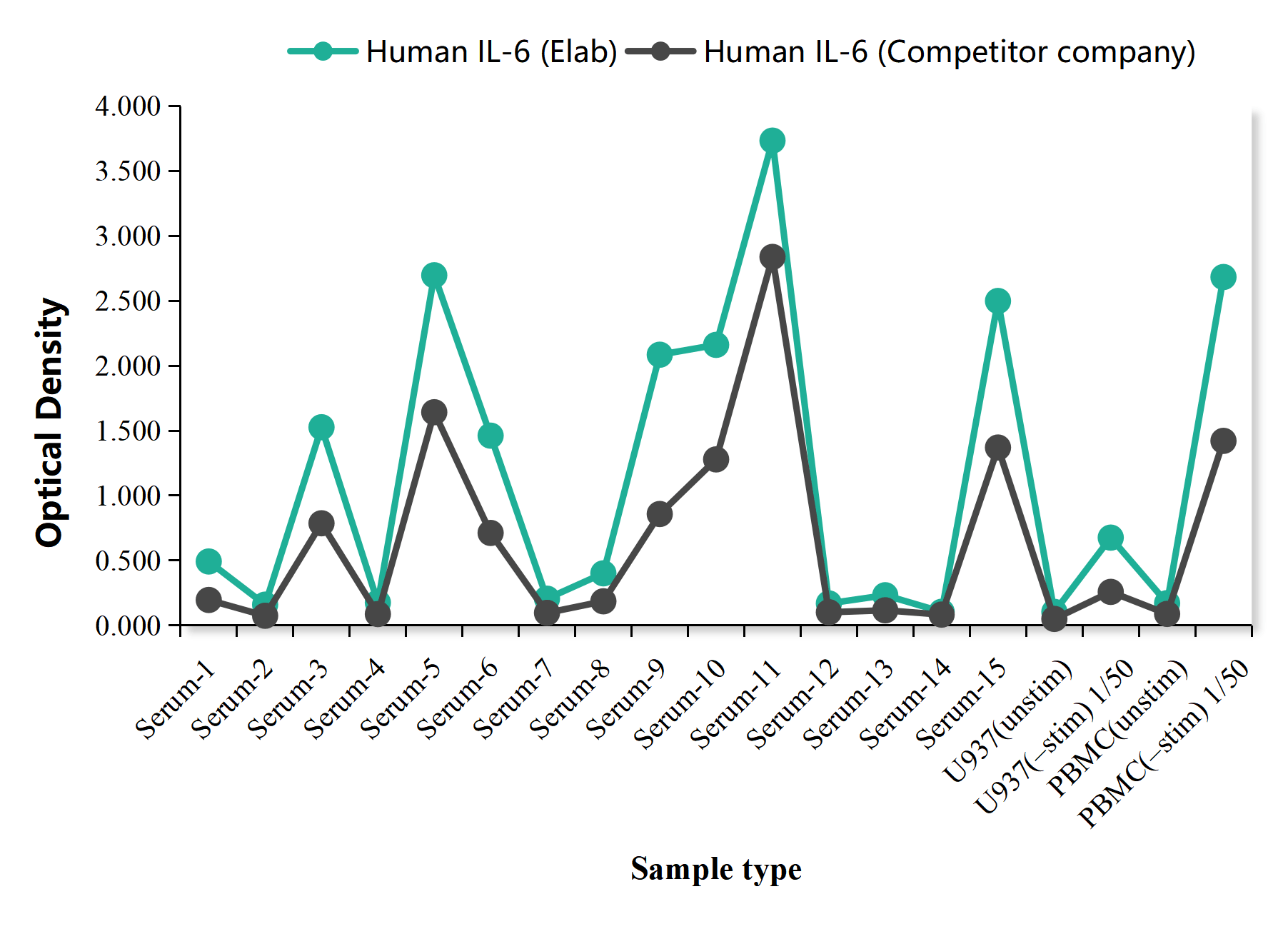
Fig. 3 Comparison of detection results in natural samples: Elabscience® vs. competitor.
05 How to select the appropriate Uncoated ELISA kit for your tumor research?
Elabscience® offers over 700 uncoated ELISA kits covering cancer, immunology, metabolism, signal transduction, and more. For oncology research, you can quickly narrow down your choice using the following steps:
1. Identify your target protein (e.g., Human VEGF165, Mouse TIMP-1).
2. Confirm your sample type (serum/plasma/tissue lysate/cell supernatant).
3. Select the required size: 96T*5 for small‑scale experiments or assay development; 96T*15 for large‑cohort validation studies.
4. For ancillary reagents (coating buffer, blocking buffer, wash buffer, TMB substrate, etc.), choose Elabscience® Ancillary Reagent Kit (Cat. No. E-ELIR-K001).
Elabscience's technical support team is available to help you optimize assay conditions, especially for challenging tumor sample matrices.
Uncoated ELISA kits offer a flexible, cost‑effective, and customizable solution for tumor biomarker discovery and validation. Whether you are screening novel biomarkers, analyzing the tumor immune microenvironment, or evaluating anti‑cancer drug efficacy, Elabscience® uncoated kits help you obtain high‑quality, reproducible data.
References:
[1] Yue Zhou, Lei Tao,Tumor biomarkers for diagnosis, prognosis and targeted therapy, Signal Transduction and Targeted Therapy 132(2024).
[2] Zhang, J. et al. Single-cell transcriptome-based multilayer network biomarker for predicting prognosis and therapeutic response of gliomas. Brief. Bioinform. 21, 1080-1097 (2020).

